

 Article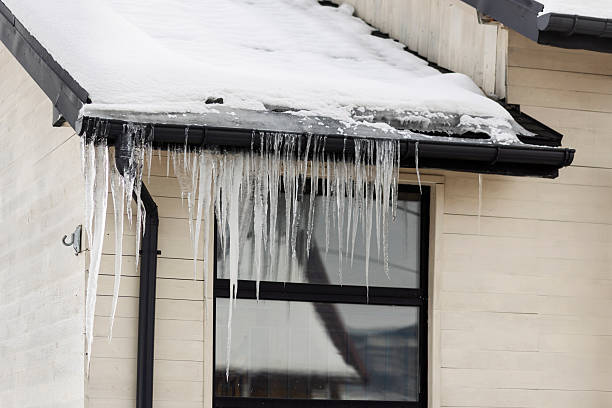
What Is an Ice Dam?
An ice dam is a buildup of ice that forms along the edge of a roof, preventing melting snow from draining properly. As water backs up behind the dam, it can seep under shingles and leak into your home.
Ice dams are most common on sloped roofs in cold climates, especially after heavy snowfall followed by fluctuating temperatures.
What Causes Ice Dams?
Ice dams form due to uneven roof temperatures. Here’s how it happens:
- Heat escapes from your attic and warms the roof
- Snow on the roof melts
- Melted water flows down to the colder roof edges
- Water refreezes at the eaves, forming ice buildup
Over time, this cycle continues, creating a thick ridge of ice that blocks proper drainage.
Signs You Have Ice Dams
Ice dams aren’t always obvious at first. Look for these warning signs:
- Large icicles hanging from gutters
- Ice buildup along roof edges
- Water stains on ceilings or walls
- Peeling paint or warped drywall
- Damp insulation in the attic
If you notice any of these, it’s important to act quickly to prevent further damage.
Why Ice Dams Are Dangerous
Ice dams can cause significant problems for your home, including:
Roof Damage
Water trapped behind the ice can lift shingles and penetrate your roofing system.
Interior Water Damage
Leaks can damage ceilings, walls, insulation, and even electrical systems.
Mold and Mildew Growth
Moisture buildup creates the perfect environment for mold, which can affect indoor air quality.
Gutter Damage
The weight of ice can pull gutters away from your home or cause them to collapse.
How to Prevent Ice Dams
Preventing ice dams starts with proper roof and attic management. Here are the most effective solutions:
Improve Attic Insulation
Proper insulation helps keep warm air inside your home and prevents heat from escaping into the attic.
Ensure Proper Ventilation
Good airflow keeps your roof temperature consistent, reducing uneven melting and refreezing.
Seal Air Leaks
Close gaps around vents, pipes, and light fixtures to prevent warm air from rising into the attic.
Install Tapered Insulation or Proper Drainage
For flat or low-slope roofs, proper drainage systems help prevent water buildup and freezing.
Keep Gutters Clean
Clogged gutters can worsen ice dam formation by blocking water flow.
Use Ice and Water Shield
This protective underlayment adds an extra barrier against leaks caused by ice dams.
Safe Ice Dam Removal
If an ice dam has already formed, avoid trying to remove it yourself with sharp tools, as this can damage your roof.
Safer options include:
- Hiring a professional roofing contractor
- Using steam removal services
- Applying calcium chloride (not rock salt) to melt ice
When to Call a Professional
If you’re experiencing recurring ice dams or notice signs of water damage, it’s time to contact a roofing professional. Addressing the root cause—such as poor insulation or ventilation—is key to long-term prevention.
At Pro Tech Improvements LLC, we specialize in roof inspections, repairs, and winter damage prevention. Our team can assess your roof and recommend the best solutions to protect your home year-round.
Conclusion
Ice dams may seem like a minor winter issue, but they can lead to major damage if ignored. By improving insulation, ventilation, and drainage, you can protect your roof and avoid costly repairs.
Taking proactive steps now will help ensure your home stays safe, dry, and energy-efficient throughout the winter season.s safe, dry, and energy-efficient throughout the winter season.